

Automated Sample Storage System
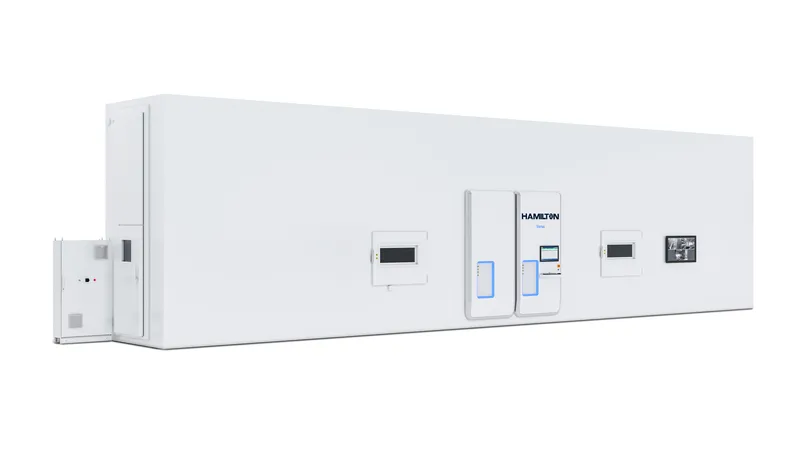
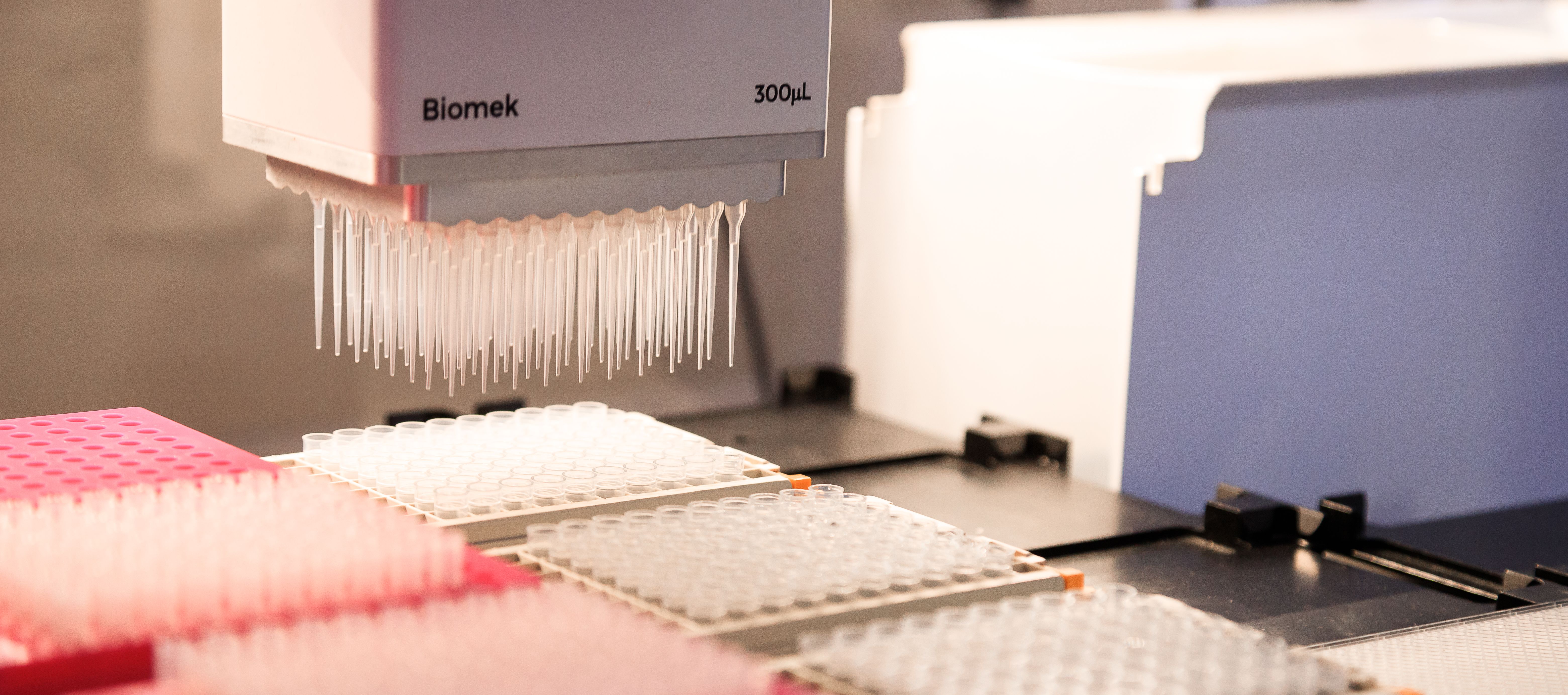
At Enamine, we are proud to operate one of the most advanced automated compound storage systems on the market - the Verso XL12 Automated Storage System.
This state-of-the-art platform significantly accelerates and simplifies compound management, ensuring unmatched precision, efficiency, and reliability for our partners worldwide.
Managing large chemical libraries is a complex task, and Verso allows us to deliver it at the highest possible standard - fully automated, fully controlled, and fully traceable.
System Highlights
- High-Density Storage Capacity. Up to 5,577,960 Hamilton 0.6 mL tubes in high-density trays, 101,280 Matrix 1.4 mL screw cap tubes (as a place holder option in native 96 position racks), or 12,165 deep well plates (height < 50 mm).
- Fully Automated Operation. Equipped with 2 Tray Shuttle Robots, 2 Universal Pickers, and 2 I/O Modules for precise and efficient sample retrieval.
- Controlled Environment. Samples are maintained at –20 °C, preserving compound integrity and quality over time.
- High Throughput. Achieves up to 2 × 1,500 tubes/hour or 170 plates/hour, supporting large batch requests and fast turnaround.
Your Compounds - Secure, Organized, and Accessible
Our Verso system ensures that every compound is stored under optimal conditions and can be quickly accessed when needed.
Whether for long-term storage, retrieval, or downstream processing, we offer dependable compound management support backed by automation and strict quality standards.


with Enamine Discovery
We live in a thrilling new era of drug discovery, benefiting from a plethora of well-established and continuously developing scientific modalities, empowered now by artificial intelligence. They enable lightning-fast access to the lead compounds in various therapeutic areas. However, this powerful modern toolkit frequently works on outdated chemical libraries historically available at pharma companies, CROs and screening centers.
Our integrated discovery approach harnesses the world’s leading CRO’s best practices in the integrated drug discovery and capitalizes on:
- Smart selection from Enamine’s latest screening libraries
- Cost control and fast progress in Enamine REAL
- Unique chemistry knowledge accumulated at Enamine
Innovation in drug discovery should be accessible - without losing quality. We offer a fast, cost-efficient start powered by smart libraries, a colossal stock of building blocks, and our REAL technology. This lets us quickly find and prioritize the right compounds, speed up the DMTA cycle, and boost early-phase results.
Whether you come with a validated target, a phenotypic readout, or a disease model, we tailor our approach to fit your specific needs. From early screening to biology and pharmacology, our MedChem experts and project leaders guide each stage with precision, quality, and efficiency.
Our MedChem board brings focus and expertise to every stage. They help set clear priorities, make informed decisions, and keep the project on track—from target evaluation to candidate selection.
Target Evaluation & Validation
We assess biological relevance, druggability, and therapeutic potential to prioritize the right targets.
Target Product Profile (TPP)
We help define key product criteria: mechanism of action, clinical use, and differentiation strategy.
Hit Generation & Screening Strategy
We design efficient screening campaign with the right libraries, technologies, and assays to deliver meaningful hits.
Hit to Lead
We support SAR development, ADME profiling, and synthetic planning to refine hit series into lead candidates.
Lead Optimization
We guide compound design to improve potency, selectivity, and developability—aligned with your TPP.
Candidate Selection
We help integrate efficacy, safety, and PK data to select the best candidates with confidence.
Unique Enamine drug discovery platform
We don't just bring together what already exists at Enamine. We connect the dots and orchestrate all available services and products into a seamless solution.
We are thrilled to announce our collaboration between Enamine and ChemPass, which will open the way for significant advancements in drug discovery. ChemPass will apply its cutting-edge approach to design innovative fragment libraries, and Enamine ensures that these novel compounds are synthesized efficiently. Together, we are establishing a new standard for fragment-screening libraries that will enable scientists to do research more quickly and effectively.
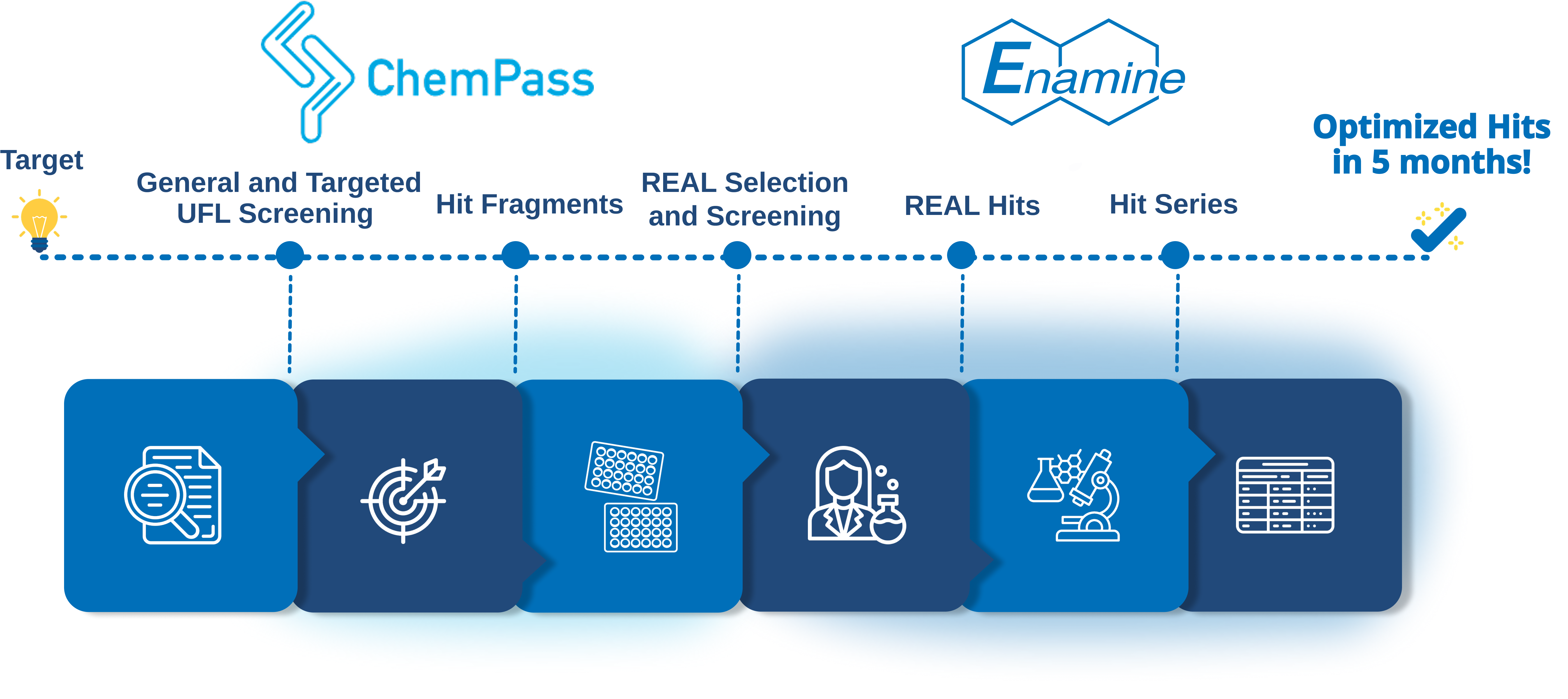
The joint effort between the two companies aims to significantly expand fragment-based hit discovery and to shorten the fragment-to-lead development cycle for challenging biological targets.
ChemPass, applying its Universal Fragment Library Design Platform, will provide general or target-specific fragment libraries based on the customer’s biological target of interest.
Enamine’s team will support the screening of the fragment libraries, the expansion of the obtained fragment hits into lead-like analogues from Enamine REAL® Space, the development of structure-activity relationship (SAR) by a few rapid rounds of screening of REAL® catalog compounds.
Overall, the application of the ChemPass Library Design Platform, Enamine’s REAL® combined with its extensive medicinal chemistry expertise, and Enamine’s screening facilities in discovery biology will deliver optimized hits to our clients in five months, a true acceleration of early-phase drug discovery.
Why UFrag™ library from Enamine & ChemPass?
- Higher success against tough targets.
- Less redundancy for easy targets.
- Superior pharmacophore analysis – better coverage, higher hit rates, fewer redundant compounds.
- Optimized fragment growth – improved hit rates and optimizability.
- More efficient vector analysis – fewer compounds, faster drug discovery.
- Short synthesis timelines, low costs, and high laboratory success rates.
Enhance the performance of your fragment library with our Service.
Leveraging our advanced fragment design platform, ChemPass and Enamine will conduct a comprehensive analysis of your existing library to identify gaps and recommend strategically selected fragments or stock solutions. This approach ensures broader binding site coverage, improved hit rates, and greater efficiency in screening campaigns, including those targeting challenging proteins. Alternatively, a general and comprehensive UFrag™ library is available from Enamine.
Optimize your fragment library for more effective and successful drug discovery!
Why UFrag™ library from Enamine & ChemPass?
- Higher success against tough targets.
- Less redundancy for easy targets.
- Superior pharmacophore analysis – better coverage, higher hit rates, fewer redundant compounds.
- Optimized fragment growth – improved hit rates and optimizability.
- More efficient vector analysis – fewer compounds, faster drug discovery.
- Short synthesis timelines, low costs, and high laboratory success rates.
The effectiveness of the hit identification process depends on the screening method and screening library quality. Typically, diversity analysis is utilized to select currently available covalent and noncovalent libraries with desirable properties. To select current covalent and noncovalent fragment libraries with desirable properties, diversity analysis is typically utilised. ChemPass' UFrag platform is based upon pharmacophore, shape and vector analysis of vast ligand binding data in the protein database and it combines several key technologies that are necessary to revolutionise fragment library design.
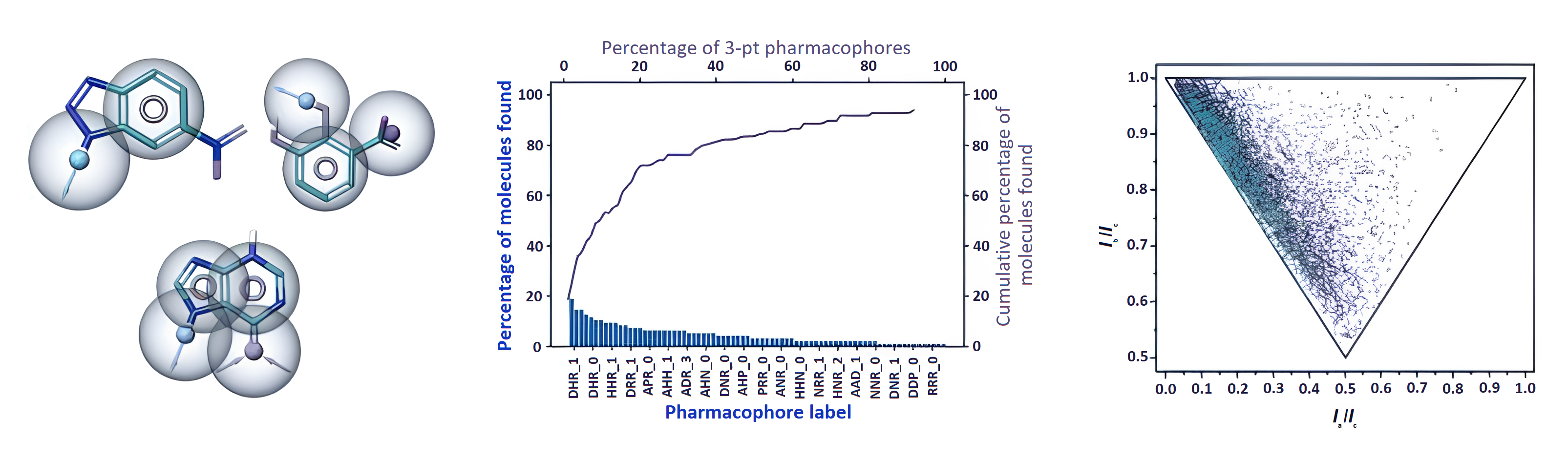
Conventional fragment libraries created through diversity analyses have been demonstrated to contain a significant number of redundant spacer and pharmacophore motifs, which leads to few to no hits against pockets of challenging targets and high hit rates of redundant rings for specific targets. The outcome is a significant danger of missed chances and a very varied experimental hit rate.
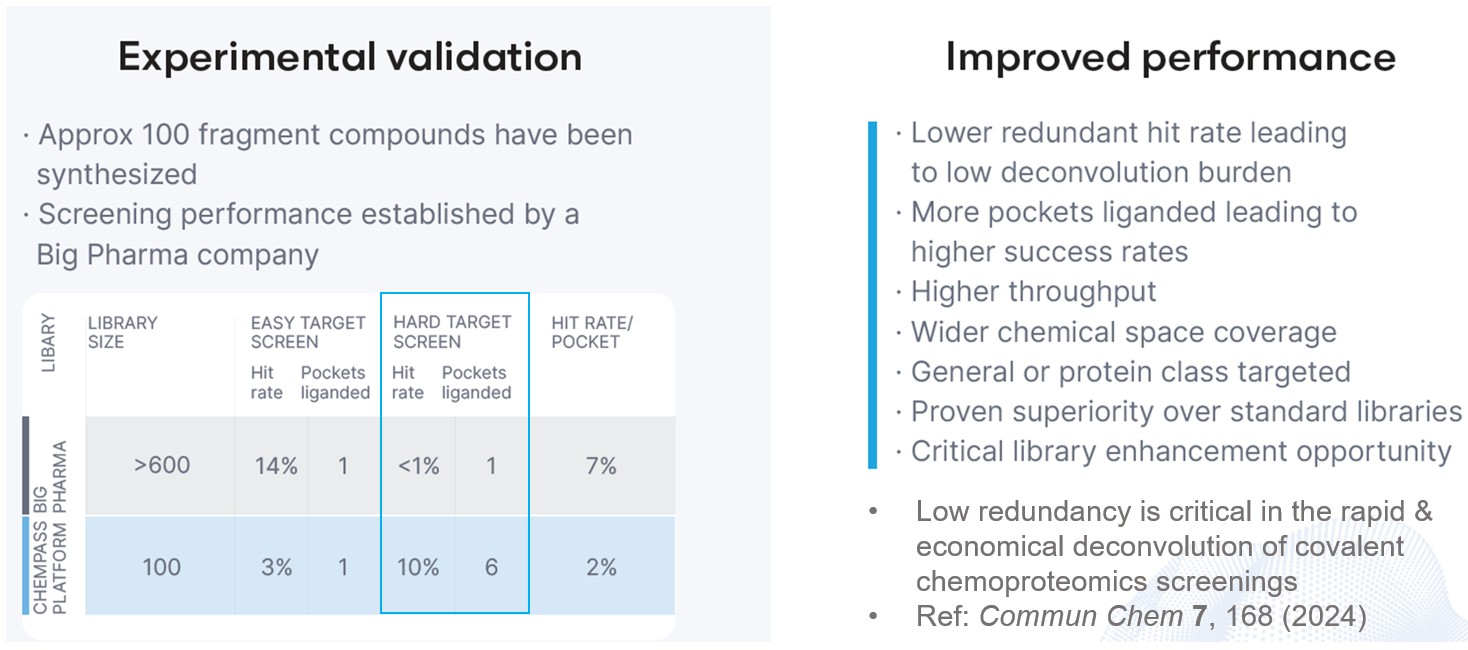
The platform's inherent customisation features allow the library design to target particular protein classes while minimising both the size of the library and the expense of synthetic materials. In order to confirm the notion, a test library was screened against a validated and hard target. The results showed that the test library produced a much higher hit rate and binding site coverage against the hard target than a standard fragment library.
Why UFrag™ library from Enamine & ChemPass?
- Higher success against tough targets.
- Less redundancy for easy targets.
- Superior pharmacophore analysis – better coverage, higher hit rates, fewer redundant compounds.
- Optimized fragment growth – improved hit rates and optimizability.
- More efficient vector analysis – fewer compounds, faster drug discovery.
- Short synthesis timelines, low costs, and high laboratory success rates.